Bacterial Genomic DNA Isolation Kit
For the rapid preparation of genomic DNA from bacteria
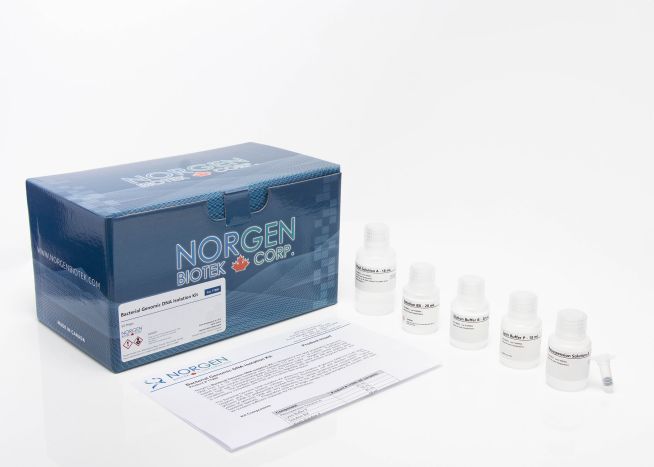
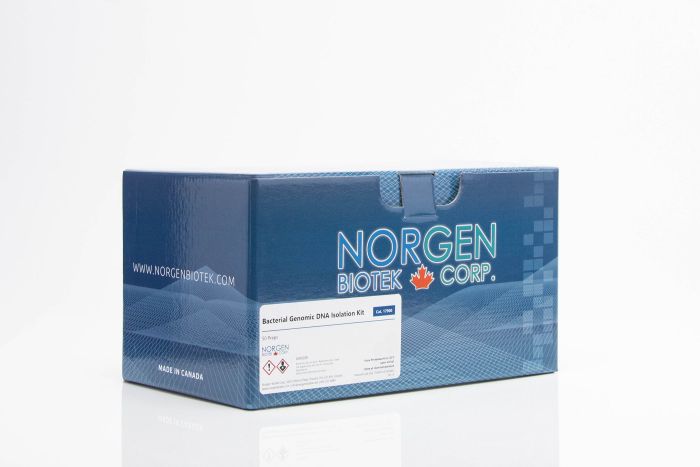
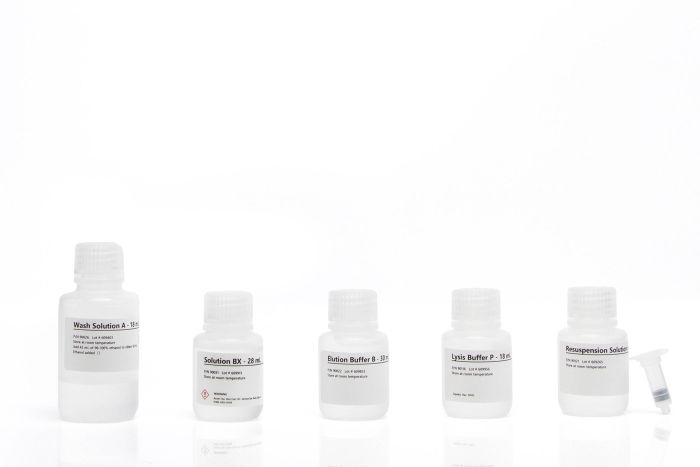
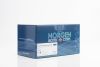
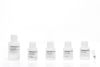
For research use only and NOT intended for in vitro diagnostics.
 Powered by Bioz
 Bacterial Genomic DNA Isolation Kit
For the rapid preparation of genomic DNA from bacteria
Overview
- Isolate genomic DNA from all types of bacteria (both Gram-positive and Gram-negative)
- Rapid and convenient spin column protocol
- 96-well format available for high throughput
- High yield, high quality DNA for sensitive downstream applications including sequencing, PCR, qPCR and more
This kit is designed for the rapid spin column preparation of genomic DNA from 2 x 10⁹ viable bacterial cells (between 0.5 and 1.0 mL of culture). This kit can be used for both Gram-negative and Gram-positive bacteria including Escherichia coli and Bacillus cereus. Purified genomic DNA is of an excellent quality and yield, and is fully compatible with restriction enzyme digestions, sequencing, PCR, qPCR and more. Also available in 96-well format for high throughput applications.
Details
Supporting Data
Figure 1. Isolation of Genomic DNA from both Gram Positive and Gram Negative Bacteria. The Bacterial Genomic DNA Isolation Kit was used to isolate genomic DNA from 1 mL overnight culture (1 x 10⁹ cells) of the Gram negative bacteria E. coli (Lanes 1 and 2), the lysozyme-resistant Gram positive bacteria B. cereus (Lanes 3 and 4) and the Gram positive bacteria M. luteus (Lanes 5 and 6). Lane M is Norgen's UltraRanger 1kb DNA Ladder. For analysis 5 µL of the 200 µL eluted genomic DNA were loaded on a 1X TAE, 0.9% agarose gel.
Figure 2. High Yield Purification. The high yield of Norgen's Bacterial Genomic DNA Isolation Kit is illustrated by purifying genomic DNA from 1 mL overnight culture (1 x 10⁹ cells) of both a Gram positive (B. cereus) and a Gram negative strain (E coli), and comparing the yield with two major competitors. The quantification of the DNA yield was performed by resolving 5 µL of the 200 µL of eluted DNA on a 1X TAE, 0.9% agarose gel followed by densitometry. With both types of bacteria, Norgen's kit was found to give a higher recovery than the competitor’s kits.
|
Kit Specifications (Spin Columns)
|
|
|
Input
|
2 x 10⁹ bacterial cells
|
|
Column Binding Capacity
|
25 µg
|
|
Average Yield*
|
Up to 20 µg
|
| Time to Complete 10 Purifications |
1 hour
|
* Yield will vary depending on the type of sample processed
Storage Conditions and Product Stability
All solutions should be kept tightly sealed and stored at room temperature. This kit is stable for 2 years after the date of shipment. The kit contains a ready-to-use Proteinase K, which is dissolved in a specially prepared storage buffer. The buffered Proteinase K is stable for up to 2 years after the date of shipment when stored at room temperature.
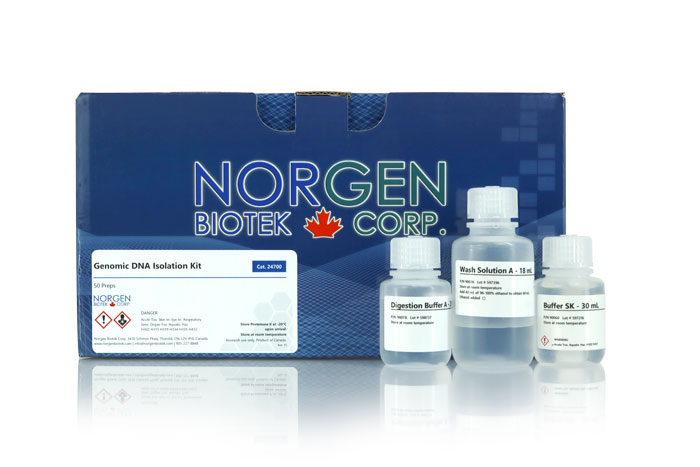
| Component | Cat. 17900 (50 preps) | Cat. 17950 (192 preps) |
|---|---|---|
| Resuspension Solution A | 20 mL | 60 mL |
| Lysis Buffer P | 18 mL | 60 mL |
| Solution BX | 28 mL | 110 mL |
| Wash Solution A | 18 mL | 2 x 38 mL |
| Elution Buffer B | 30 mL | 2 x 30 mL |
| Proteinase K | 12 mg | 50 mg |
| Spin Columns | 50 | - |
| 96-Well Plate | - | 2 |
| Adhesive Tape | - | 4 |
| Collection Plate | - | 2 |
| Collection Tubes | 50 | - |
| Elution Tubes (1.7 mL) | 50 | - |
| Elution Plate | - | 2 |
| Product Insert | 1 | 1 |
Documentation
FAQs
Spin Column, High Throughput
Column clogging can result from the following:
- The sample is too large.
Too many cells were applied to the column. Ensure that the amount of cells used is less than 2 x 10⁹ viable cells, and that no more than 1 mL of culture is applied to the column/well. Clogging can be alleviated by increasing the g force and/or centrifuging for a longer period of time until the lysate passes through the column.
- Insufficient Vacuum (for High-throughput only).
Ensure that a vacuum pressure of at least -650 mbar or -25 in. Hg is developed.
- Centrifuge temperature is too low.
Ensure that the centrifuge remains at room temperature throughout the procedure. Temperatures below 15℃ may cause precipitates to form that can cause the wells to clog.
Experiencing gelatinous lysate prior to loading onto the column may be due to:
- The lysate/binding solution mixture is not homogeneous.
To ensure a homogeneous solution, vortex for 10-15 seconds before applying the lysate to the spin column.
- The sample is too large.
Too many cells are in the lysate preparation. Ensure that the amount of cells used is less than 2 x 10⁹ viable cells, and that no more than 1 mL of culture is applied to the column/well.
A low genomic DNA yield may be caused by the following:
- The sample is old/overgrown.
The culture may have been overgrown, allowing lysis of older cells to occur more readily. This will lead to premature degradation of the genomic DNA. It may be necessary to use bacterial cultures before they reach maximum density.
- Incomplete lysis of cells.
Extend the incubation time of Proteinase K digestion or reduce the amount of bacterial cells used for lysis. Increase the lysozyme incubation time for gram-positive strains.
- The DNA elution is incomplete.
Ensure that centrifugation at 20,000 x g is performed after the 3,000 x g centrifugation cycle to ensure that all the DNA is eluted.
Sheared genomic DNA could be caused by:
- Improper handling of genomic DNA.
Pipetting steps should be handled as gently as possible. Reduce vortexing times during mixing steps (no more than 10-15 seconds).
- The cells are old.
Older cultures contain prematurely lysed cells which release endonucleases and can degrade DNA. Fresh cultures are recommended.
If the DNA does not perform well in downstream applications, it may be due to one or more of the following:
- DNA was not washed two times with the provided Wash Solution A.
Ensure the column/plate was washed two times with Wash Solution A. An additional wash with Wash Solution A can improve DNA performance in downstream applications, although it may reduce DNA yield.
- Ethanol carryover.
Ensure that the column/plate drying step after the Wash procedure is performed in order to remove traces of ethanol prior to elution. Ethanol is known to interfere with many downstream applications.
Yes, the DNA from this kit is good for both Nanopore sequencing and Long-read sequencing. Please contact our Tech support team at support@norgenbiotek.com and ask for reference publications.
Citations
| Title | Feasibility of 16S rRNA sequencing for cerebrospinal fluid microbiome analysis in cattle with neurological disorders: a pilot study |
| Journal | Veterinary Research Communications. 2022. |
| Authors | Sara Ferrini, Elena Grego, Ugo Ala, Giulia Cagnotti, Flaminia Valentini, Giorgia Di Muro, Barbara Iulini, Maria Cristina Stella, Claudio Bellino & Antonio D’Angelo |
| Title | Bacterial Community and Genomic Analysis of Carbapenem-Resistant Acinetobacter baumannii Isolates from the Environment of a Health Care Facility in the Western Region of Saudi Arabia |
| Journal | Pharmaceuticals. 2022. |
| Authors | Muhammad Yasir, Abdullah Mohammad Subahi, Hani A. Shukri, Fehmida Bibi, Sayed Sartaj Sohrab, Maha Alawi, Anees A. Sindi, Asif A. Jiman-Fatani and Esam I. Azhar |
| Title | Insights of microorganisms role in rice and rapeseed wastes as potential sorbents for metal removal |
| Journal | Int. J. Environ. Sci. Technol.. 2022. |
| Authors | X. Shen, J. Zhao, N. Bonet-Garcia, E. Villagrasa, A. Solé, X. Liao & C. Palet |
| Title | Cellulosic biofilm formation of Komagataeibacter in kombucha at oil-water interfaces |
| Journal | Biofilm. 2022. |
| Authors | Guruprakash Subbiahdoss, Sarah Osmen, Erik Reimhult |
| Title | Detection of Salmonella Typhi in Bile by Quantitative Real-Time PCR |
| Journal | Clinical Microbiology. 2022. |
| Authors | Ellen E. Higginson, Joseph Nkeze, Jasnehta Permala-Booth, Irene N. Kasumba, Rosanna Lagos, Juan Carlos Hormazabal, Alexander Byrne, Gad Frankel, Myron M. Levine, Sharon M. Tennant |
| Title | Function and Application of the CRISPR-Cas System in the Plant Pathogen Erwinia amylovora |
| Journal | Bacteriophages. 2022. |
| Authors | Michael Parcey, Steven Gayder, Alan J. Castle, Antonet M. Svircev |
| Title | Evaluation of the effect of gentamicin in surgical perfusion solution on cataract postoperative endophthalmitis |
| Journal | BMC Ophthalmology. 2022. |
| Authors | Wenjiang Ma, Guanghua Hou, Junfang Wang, Ting Liu & Fang Tian |
| Title | Campylobacter positivity and public health risks in live bird markets in Busia, Kenya: A value chain analysis |
| Journal | Transboundry and Emerging Diseases. 2022. |
| Authors | Josephat Mbai, Samuel Njoroge, Mark Obonyo, Christina Otieno, Maurice Owiny, Eric M. Fèvre |
| Title | Characterization of glucose isomerase-producing bacteria and optimization of fermentation conditions for producing glucose isomerase using biomass |
| Journal | Green Chemical Engineering. 2022. |
| Authors | Aristide Laurel Mokale Kognou, Chonlong Chio, Janak Raj Khatiwada, Sarita Shrestha, Xuantong Chen, Hongwei Li, Yuen Zhu, Zi-Hua Jiang, Chunbao (Charles) Xu, Wensheng Qin |
| Title | RNA Sequencing Elucidates Drug-Specific Mechanisms of Antibiotic Tolerance and Resistance in Mycobacterium abscessus |
| Journal | Antimicrobial Chemotherapy. 2022. |
| Authors | Jodie A. Schildkraut, Jordy P. M. Coolen , Sophie Burbaud, Jasper J. N. Sangen, Michael P. Kwint, R. Andres Floto, Huub J. M. op den Camp, Lindsey H. M. te Brake, Heiman F. L. Wertheim, Kornelia Neveling, Wouter Hoefsloot, Jakko van Ingen |
| Title | Bioleaching Potential of Indigenous Bacterial Consortia from Gold-Bearing Sulfide Ore of Ta Nang Mine in Vietnam |
| Journal | Pol. J. Environ. 2022. |
| Authors | Ngoc Tung Quach, Can Pham-Ngoc, Thi Lien Bui, Trong Hoa Tran, Thi Phuong Ngo, Van The Nguyen, Thi Hanh Nguyen Vu, Tuan Anh Tran, Hoang Ha Chu, Quyet Tien Phi |
| Title | Phenotypic and Phylogenetic Characterization of Micro-symbionts Nodulating Winged Bean (Psophocarpus tetragonolobus L. DC.) Landraces |
| Journal | West African Journal of Applied Ecology. 2022. |
| Authors | A . R. Oloyede, O. O. Oyelakin, S. O. Ogunesan |
| Title | Presence of Lactic Acid Bacteria in the Intestinal Tract of the Mediterranean Trout (Salmo macrostigma) in Its Natural Environment |
| Journal | Life. 2021. |
| Authors | Massimo Iorizzo, Gianluca Albanese, Bruno Testa, Mario Ianiro, Francesco Letizia, Mariantonietta Succi, Patrizio Tremonte, Mariasilvia D’Andrea, Nicolaia Iaffaldano, Raffaele Coppola |
| Title | Characterizing the endometrial microbiome by analyzing the ultra-low bacteria from embryo transfer catheter tips in IVF cycles: Next generation sequencing (NGS) analysis of the 16S ribosomal gene |
| Journal | Human Microbiome Journal. 2017. |
| Authors | Xin Tao, Jason M. Franasiak, Yiping Zhan, Richard T. Scott III, Jessica Rajchel, Jenna Bedard, Robert Newby Jr, Richard T. Scott, Nathan R. Treff, Tinchun Chu |
| Title | Streptomyces exploration is triggered by fungal interactions and volatile signals |
| Journal | eLIFE. 2017. |
| Authors | Jones SE,, Ho L, Rees CA,, Hill JE,, Nodwell JR, Elliot MA |
| Title | Isolation, identification and characterization of Paenibacillus polymyxa CR1 with potentials for biopesticide, biofertilization, biomass degradation and biofuel production |
| Journal | BMC Microbiology. 2016. |
| Authors | Weselowski B, Nathoo N,, Eastman AW,, MacDonald J, Yuan ZC |
| Title | Root-hair endophyte stacking in finger millet creates a physicochemical barrier to trap the fungal pathogen Fusarium graminearum |
| Journal | Nature Microbiology. 2016. |
| Authors | Mousa WK, Shearer C, Limay-Rios V, Ettinger CL, Eisen JA, Raizada MN. |
| Title | Genome Sequence of the Historical Clinical Isolate Burkholderia pseudomallei PHLS 6 |
| Journal | Genome Announcements. 2016. |
| Authors | D'haeseleer P, Johnson SL, Davenport KW, Chain PS, Schoeniger J, Ray D, Sinha A, Williams KP, Peña J, Branda SS, El-Etr S |
| Title | The Presence of ICAAS Genes in Commensals of Coagulase-Negative Staphylococcus and Evaluation of Phenotypic Biofilm Formation by CRA and CRAVC Methods |
| Journal | Jurnal Teknologi. 2016. |
| Authors | Abdul-Aziz, A., & Rahim, N. A |
| Title | Genotypic and Phenotypic Heterogeneity in Alicyclobacillus acidoterrestris: A Contribution to Species Characterization |
| Journal | PLOS ONE. 2015. |
| Authors | Antonio Bevilacqua, Monica Mischitelli, Valeria Pietropaolo, Emanuela Ciuffreda, Milena Sinigaglia, Maria Rosaria Corbo |
| Title | Characterization and the influence of milk solids-not-fat on the bacteriocin produced by Lactococcus lactis subsp. lactis S20 isolated from Chinese sauerkraut, a traditional fermented vegetable |
| Journal | Annals of Microbiology. 2015. |
| Authors | Yih-Zhet Chin, Selvi Velu, Fatimah Abu Bakar, Mahmud-Ab-Rashid Nor-Khaizura |
| Title | Development of a Multiple Loci Variable Number of Tandem Repeats Analysis (MLVA) to Unravel the Intra-Pathovar Structure of Pseudomonas syringae pv. actinidiae Populations Worldwide |
| Journal | PLOS ONE. 2015. |
| Authors | Serena Ciarroni, Lorenzo Gallipoli, Maria C. Taratufolo, Margi I. Butler, Russell T. M. Poulter, Christine Pourcel, Gilles Vergnaud, Giorgio M. Balestra, Angelo Mazzaglia |
| Title | Molecular Epidemiology of Escherichia Coli in HIV-Positive Individuals in South west Nigeria |
| Journal | International Archives of Medicine. 2015. |
| Authors | Lawrence Ehis Okoror, Duna Christina Fashina, Titilayo Silifat Jimoh, Ezekiel Ayo Oisagah |
| Title | Genome Sequence of Anoxybacillus flavithermus Strain AK1, a Thermophile Isolated from a Hot Spring in Saudi Arabia |
| Journal | Genome Announcements. 2015. |
| Authors | Khalil A, Sivakumar N, Qarawi S |
| Title | Isolation and Molecular Characterization of Brucella Isolates in Cattle Milk in Uganda |
| Journal | BioMed Research International. 2015. |
| Authors | Denis Rwabiita Mugizi, Shaman Muradrasoli, Sofia Boqvist, Joseph Erume, George William Nasinyama, Charles Waiswa, Gerald Mboowa, Markus Klint, and Ulf Magnusson |
| Title | Genotypic and phenotypic virulence characteristics and antimicrobial resistance of Yersinia spp. isolated from meat and milk products |
| Journal | Journal of Food Science. 2015. |
| Authors | Fatma Özdemir andSeza Arslan |
| Title | Microarray-based identification of human antibodies against Staphylococcus aureus antigens |
| Journal | Proteomics Clinical Applications. 2015. |
| Authors | Peggy Kloppot, Martina Selle, Christian Kohler, Sebastian Stentze, Stephan Fuchs, Volkmar Liebscher, Elke Müller, Devika Kale, Knut Ohlsen, Barbara M. Bröker, Peter F. Zipfel, Barbara C. Kahl, Ralf Ehricht, Michael Hecker and Susanne Engelmann |
| Title | Isolation of a significant fraction of non-phototroph diversity from a desert Biological Soil Crust. |
| Journal | Frontiers in Microbiology. 2015. |
| Authors | Ulisses Nunes da Rocha, Hinsby Cadillo-Quiroz, Ulas Karaoz, Lara Rajeev, Niels Klitgord, Sean Dunn, Viet Truong, Mayra Buenrostro, Benjamin Paul Bowen, Ferran Garcia-Pichel, Aindrila Mukhopadhyay, Trent Russell Northen and Eoin L Brodie. |
| Title | Investigation of the Presence of Class 1, 2, 3 Integrons and Their Relationships with Antibiotic Resistance in Clinical Stenotrophomonas maltophilia Isolates. |
| Journal | Mikrobiyol Bul. 2015. |
| Authors | Egemen USTA, Cafer EROĞLU, Keramettin YANIK, Adil KARADAĞ, Akif Koray GÜNEY, Murat GÜNAYDIN. |
| Title | Draft Genome Sequence of Burkholderia gladioli Strain UCDUG_ CHAPALOTE (Phylum Proteobacteria). |
| Journal | Genome Announc. 2015. |
| Authors | Cassandra L. Ettinger, Hanan R. Shehata, David Johnston-Monje, Manish N. Raizad, Jonathan A. Eisen. |
| Title | Sequence Analysis of CRISPR Arrays of Erwinia amylovora isolates from Canada. |
| Journal | ISHS Acta Horticulturae. 2014. |
| Authors | A.I. Yagubi, A.J. Castle, A.M. Svircev. |
| Title | Functional validation of putative toxin-antitoxin genes from the Gram-positive pathogen Streptococcus pneumoniae: phd-doc is the fourth bona-fide operon. |
| Journal | Frontiers in Microbiology. 2014. |
| Authors | Wai Ting Chan, Chew Chieng Yeo, Ewa Sadowy and Manuel Espinosa. |
| Title | Insertion/Deletion-Based Approach for the Detection of Escherichia coli O157:H7 in Freshwater Environments. |
| Journal | American Chemical Society. 2014. |
| Authors | Shirley Y. Wong, Athanasios Paschos, Radhey S. Gupta, and Herb E. Schellhorn. |
| Title | Genome Sequence of Growth-Improving Paenibacillus mucilaginosus Strain KNP414. |
| Journal | Genome Announcements. 2013. |
| Authors | Lu JJ, Wang JF, Hu XF. |
| Title | Isolation and Molecular Characterization of Lactic Acid Bacteria Isolated from Fresh Fruits and Vegetables Using Nested PCR Analysis. |
| Journal | British Microbiology Research Journal. 2013. |
| Authors | Emerenini E, Afolabi O, Okolie P and Akintokun A |
| Title | Toxigenic genes, spoilage potential, and antimicrobial resistance of Bacillus cereus group strains from ice cream. |
| Journal | Anaerobe. 2013. |
| Authors | Arslan S, Eyi A, Küçüksarı R. |
| Title | Characterizing metabolic interactions in a clostridial co-culture for consolidated bioprocessing. |
| Journal | BMC Biotechnology. 2013. |
| Authors | Salimi F, Mahadevan R. |
| Title | Potential Immunogenic Polypeptides of Burkholderia pseudomallei Identified by Shotgun Expression Library and Evaluation of Their Efficacy for Serodiagnosis of Melioidosis. |
| Journal | International Journal of Medical Sciences. 2013. |
| Authors | Puah SM, Puthucheary S, Chua KH. |
| Title | Performance Evaluation and Bacterial Characterization of Membrane Bioreactors. |
| Journal | Bioresource Technology. 2013. |
| Authors | Khana SJ, Parveena F, Ahmada A, Hashmia I and Hankins N. |
| Title | Isolation, selection and characterization of root-associated growth promoting bacteria in Brazil Pine (Araucaria angustifolia). |
| Journal | Microbiological Research. 2012. |
| Authors | Ribeiro CM, Cardoso EJ. |
| Title | Plant growth promoting bacteria in Brachiaria brizantha. |
| Journal | World Journal of Microbiology and Biotechnology. 2012. |
| Authors | Silva MC, Figueiredo AF, Andreote FD, Cardoso EJ. |
| Title | Powerful bacterial killing by buckwheat honeys is concentration-dependent, involves complete DNA degradation and requires hydrogen peroxide. |
| Journal | Frontiers in Microbiology. 2012. |
| Authors | Brudzynski K, Abubaker K, Wang T. |
| Title | First Report of Leaf Spot of Sesame Caused by Xanthomonas sp. In the United States. |
| Journal | Plant Disease. 2012. |
| Authors | Isakeit T, Hassett B, and Ong K. |
| Title | Heterologous expression and characterization of an N-acetyl-β-D-hexosaminidase from Lactococcus lactis ssp. lactis IL1403. |
| Journal | Journal of Agricultural and Food Chemistry. 2011. |
| Authors | Nguyen HA, Nguyen TH, Kren V, Eijsink VG, Haltrich D, Peterbauer CK. |
| Title | Molecular Characterization of Clinical Isolates of Aeromonas Species from Malaysia. |
| Journal | PLOS One. 2011. |
| Authors | Puthucheary SD, Puah SM, Chua KH. |
| Title | Re-examining the role of hydrogen peroxide in bacteriostatic and bactericidal activities of honey. |
| Journal | Frontiers in Microbiology. 2011. |
| Authors | Brudzynski K, Abubaker K, Laurent M, Castle A. |
| Title | Macrolide resistance and In Vitro selection of resistance to antibiotics in Lactobacillus isolates. |
| Journal | Journal of Microbiology. 2011. |
| Authors | Drago L, Mattina R, Nicola L, Rodighiero V, De Vecchi E. |
| Title | Isolation and characterization of three thermophilic bacterial strains (lipase, cellulose and amylase producers) from hot springs in Saudi Arabia. |
| Journal | African Journal of Biotechnology. 2011. |
| Authors | Amjad Khalil. |